Toronto to Ottawa
About 450 km on Highways 401 and 416. Charging needs depend on your car, starting charge and weather.


Canada’s busiest intercity drive is an easy EV trip once the charging is planned. The numbers below come from a real trip plan in the app.
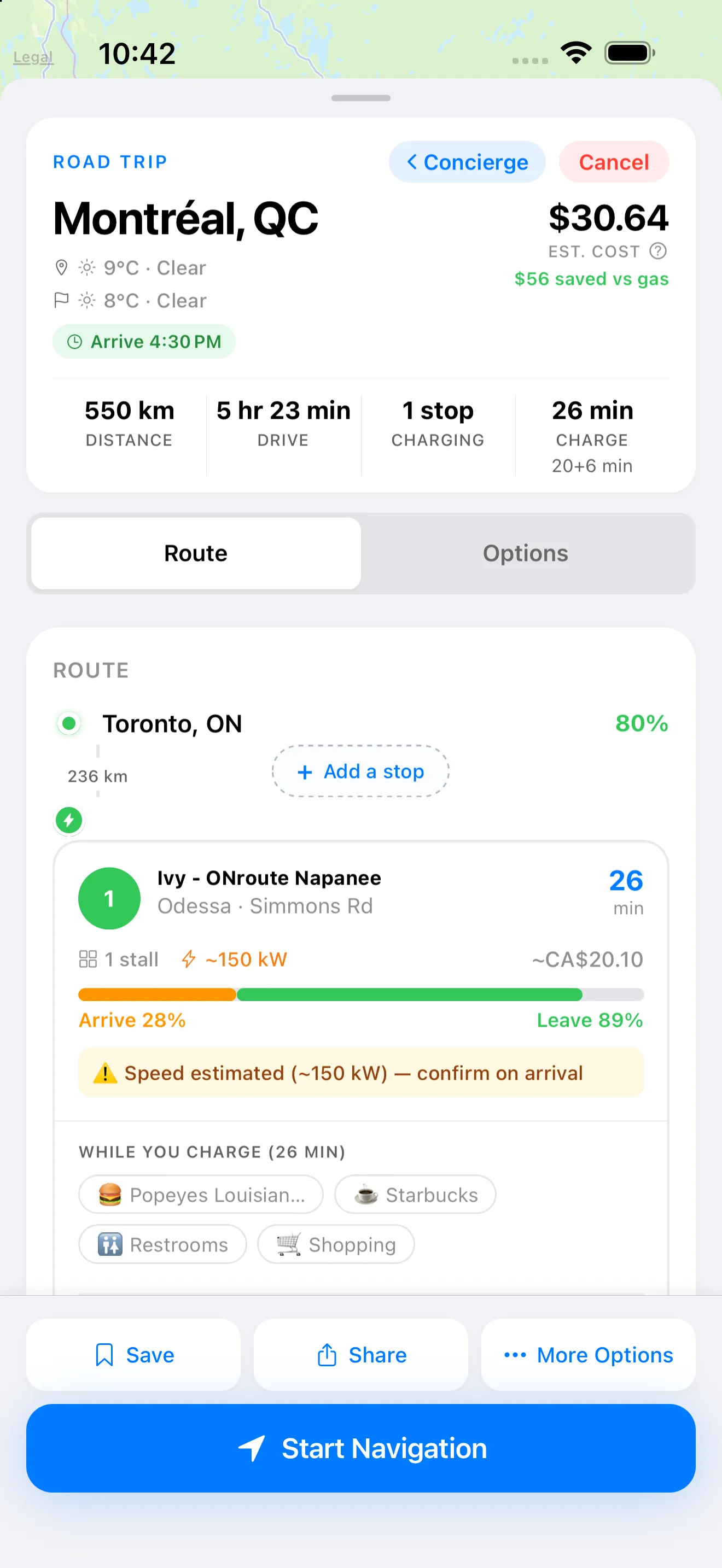
Toronto to Montréal is about 550 km and about 5.5 hours of driving. Montréal to Toronto is about the same the other way. In an EV, the example plan has one charging stop of about 26 minutes.
| Distance | 550 km in the example plan |
|---|---|
| Drive time without charging | About 5.5 hours of driving (5 hr 23 min in the example plan) |
| Main highways | Highway 401 in Ontario, Autoroute 20 in Québec |
| Charging stops | 1 stop of about 26 minutes in the example plan; sometimes 2 in winter |
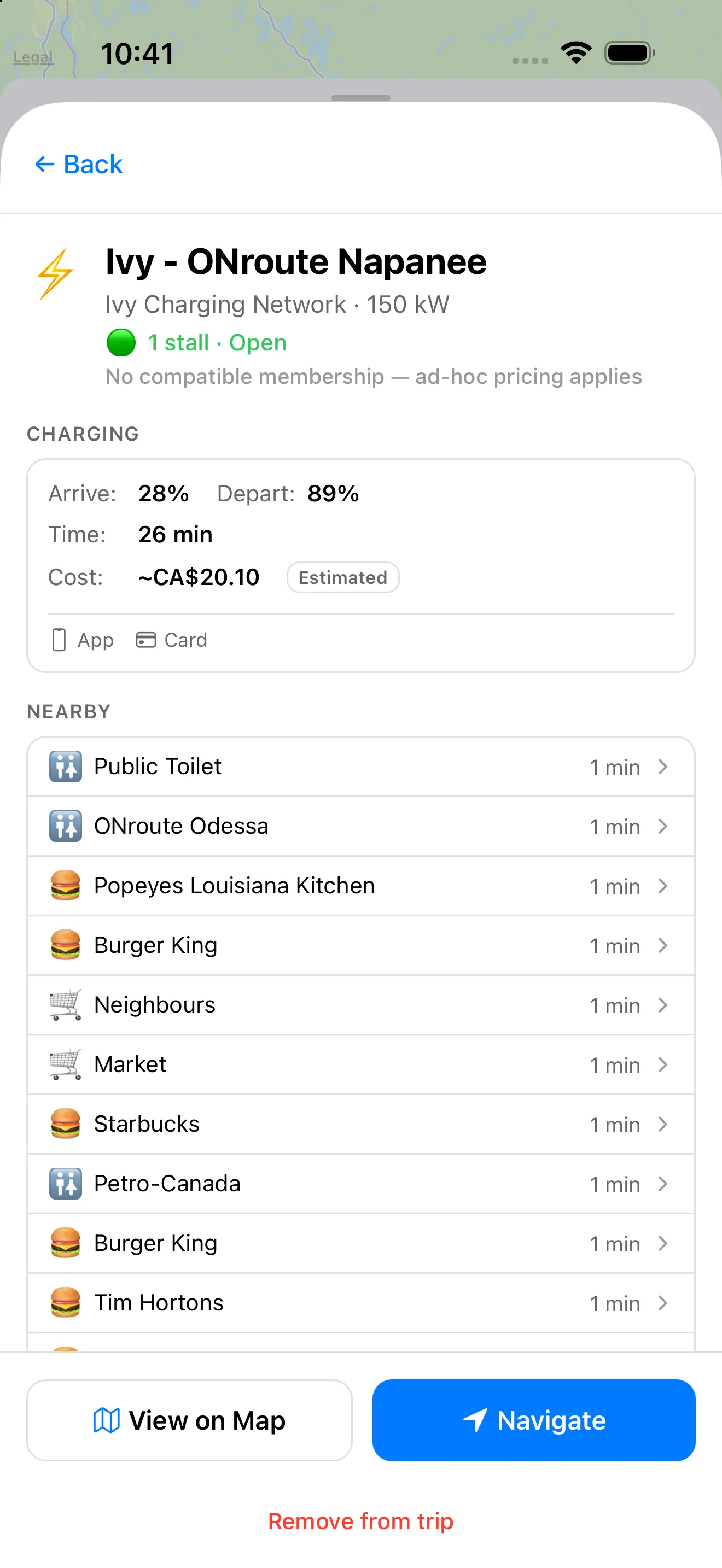
For a 2024 Hyundai Ioniq 5 leaving Toronto at 80%, GYST planned one fast-charging stop at the Ivy chargers at the Napanee ONroute service centre on Highway 401, 236 km in: arrive at 28%, leave at 89%, about 26 minutes and about $20.10 at the charger.
The car reaches Montréal with about 20% left. GYST estimated $30.64 for the whole trip: about $20 at the charger, plus about $10.50 for the charge you leave home with. The ONroute has food, coffee and washrooms a minute’s walk from the chargers.
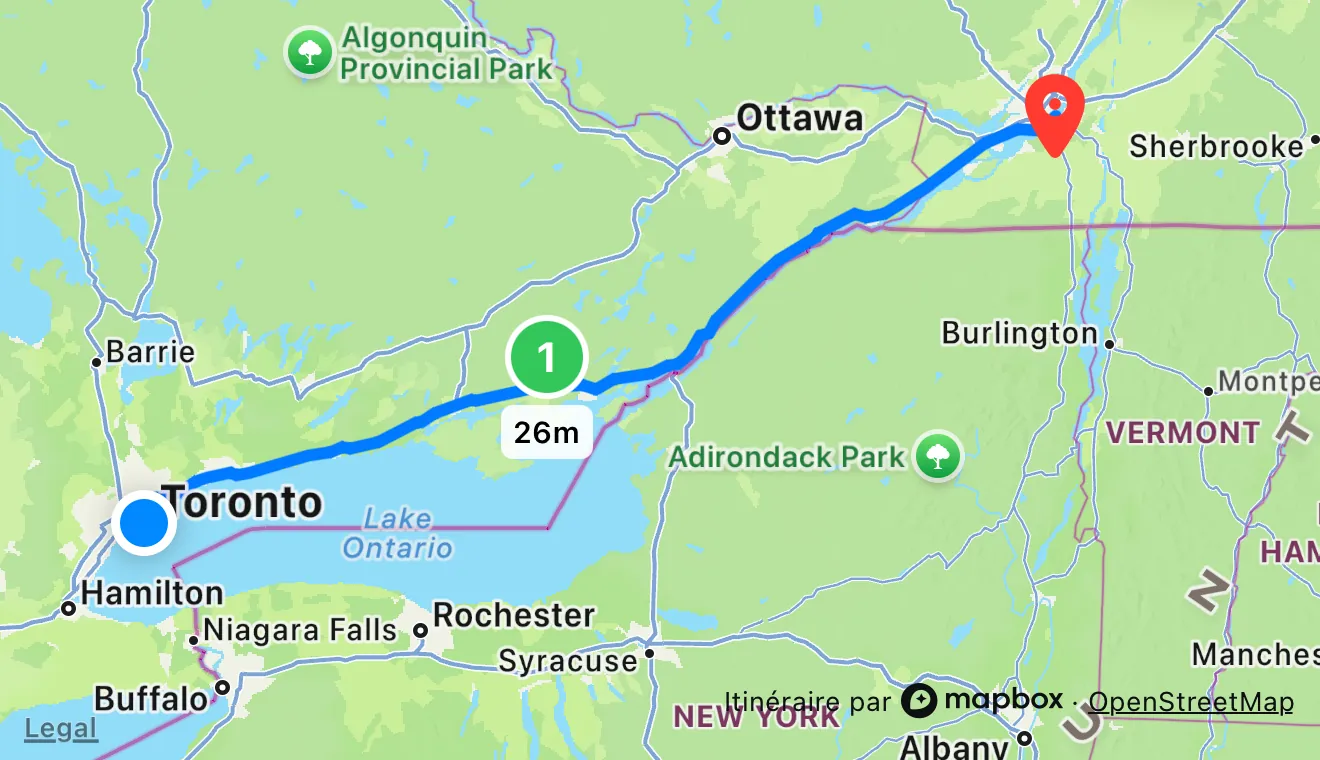
Planned in GYST on October 6, 2026. Estimates only: your car, the weather and traffic will change the numbers.
Silent video. Captions: Your charger is sorted. Where are you eating? Toronto to Montréal: GYST plans the charging stop. Napanee, 26 min: coffee and food a minute from the chargers. Hungry for something else? Add a stop and see the detour first. The video shows the GYST plan, the charging stop screen and the Add a stop list over a map of the route, then ends on drivegyst.com.
Charge to 100% at home and the plan gets shorter. On October 29, 2026, GYST planned Toronto to Montréal again from a full battery: one 12-minute charging stop instead of 26 minutes, 544 km and about 5 hours 33 minutes of driving, and an estimated $29.25 for the whole trip.
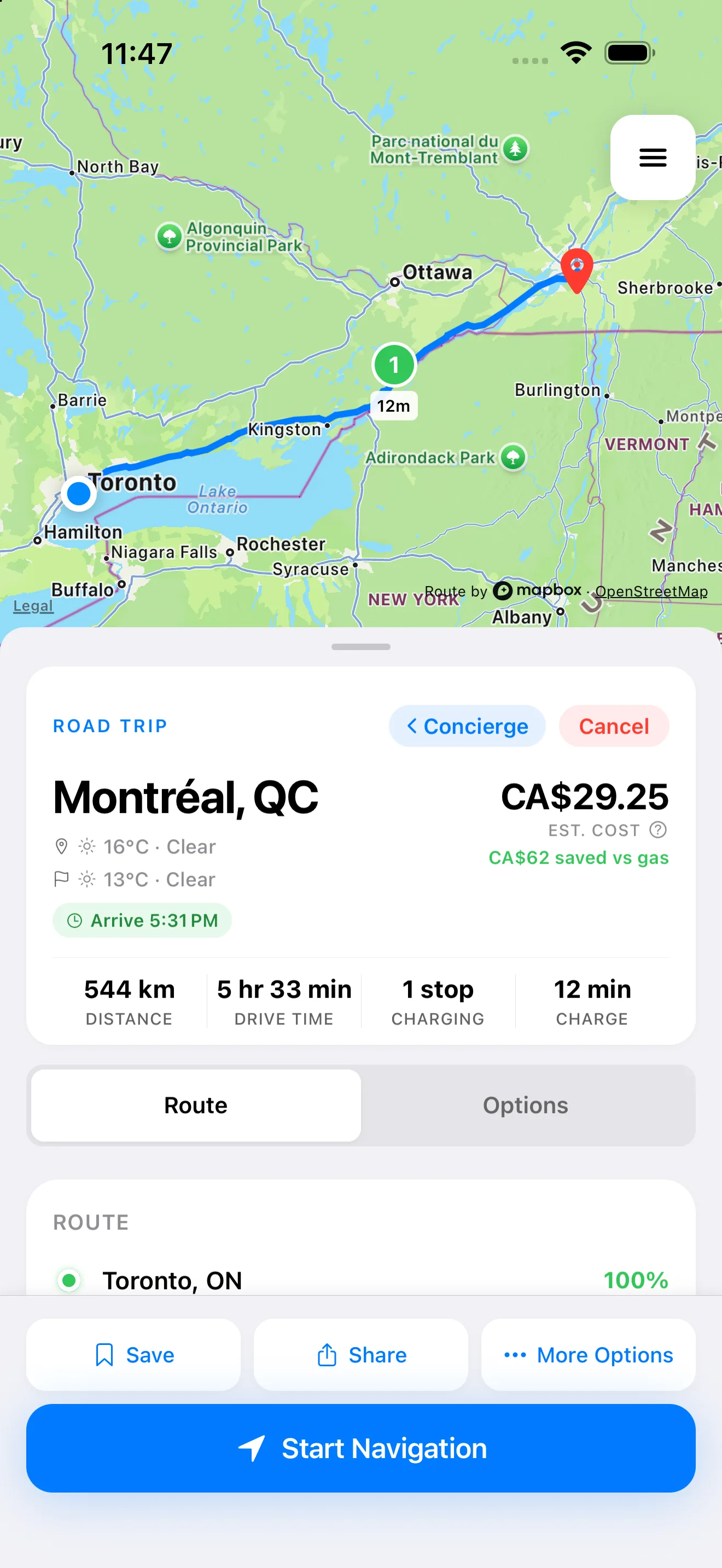
Planned in GYST on October 29, 2026, for a 2024 Hyundai Ioniq 5 Long Range AWD. Estimates only: your car, the weather and traffic will change the numbers.
Highway 401 has service centres with DC fast chargers, and towns like Kingston, Brockville and Cornwall sit close to the halfway point, a natural place for a charging stop and a meal.
Once you cross into Québec, fast chargers are frequent along Autoroute 20 on the approach to Montréal, so the last leg is rarely a worry.
Cold weather and highway speeds reduce range. In winter, plan for an extra stop or a longer charge, and recalculate your plan before you leave.
Charging networks bill differently (by the kWh or by the minute) so two similar stops can cost different amounts. GYST shows an estimated charging cost before you go.
In Québec, look for signs that say “borne de recharge”: that’s a charging station.
Pick your exact vehicle, enter Montréal and GYST builds the route with compatible charging stops, charging time and estimated cost. Add a coffee, lunch or dog stop along the way.
GYST doesn’t replace your maps app. When it’s time to drive, send each leg to Apple Maps, Google Maps, Waze or your Tesla.
In our example plan, a 2024 Hyundai Ioniq 5 leaving Toronto at 80% needed one 26-minute stop near Napanee. Cars with shorter range, cold weather or higher speeds can add a second stop.
The Kingston to Cornwall stretch of Highway 401 is roughly halfway and has several fast-charging options.
Distances and times are approximate and change with traffic, weather, speed and your vehicle. Always check your plan and charger status before you leave.
About 450 km on Highways 401 and 416. Charging needs depend on your car, starting charge and weather.
About 250 km on Autoroute 40 or 20. Check whether your car and starting charge allow a direct drive.
How to plan stops, networks and overnights when the kids are in the car.
A real plan split into charger cost and home charge: $30.64 for Toronto to Montréal.
Target and minimum arrival charge, with a real plan that reached Montréal at 20%.