Toronto to Montréal
80%20%
550 km1 stop · 26 minabout $31
Read the guide
Every EV trip plan comes down to one number: how much charge you want left when you pull into a charger or reach the end of the trip. Here is how we set it, and what it changed on a real plan.
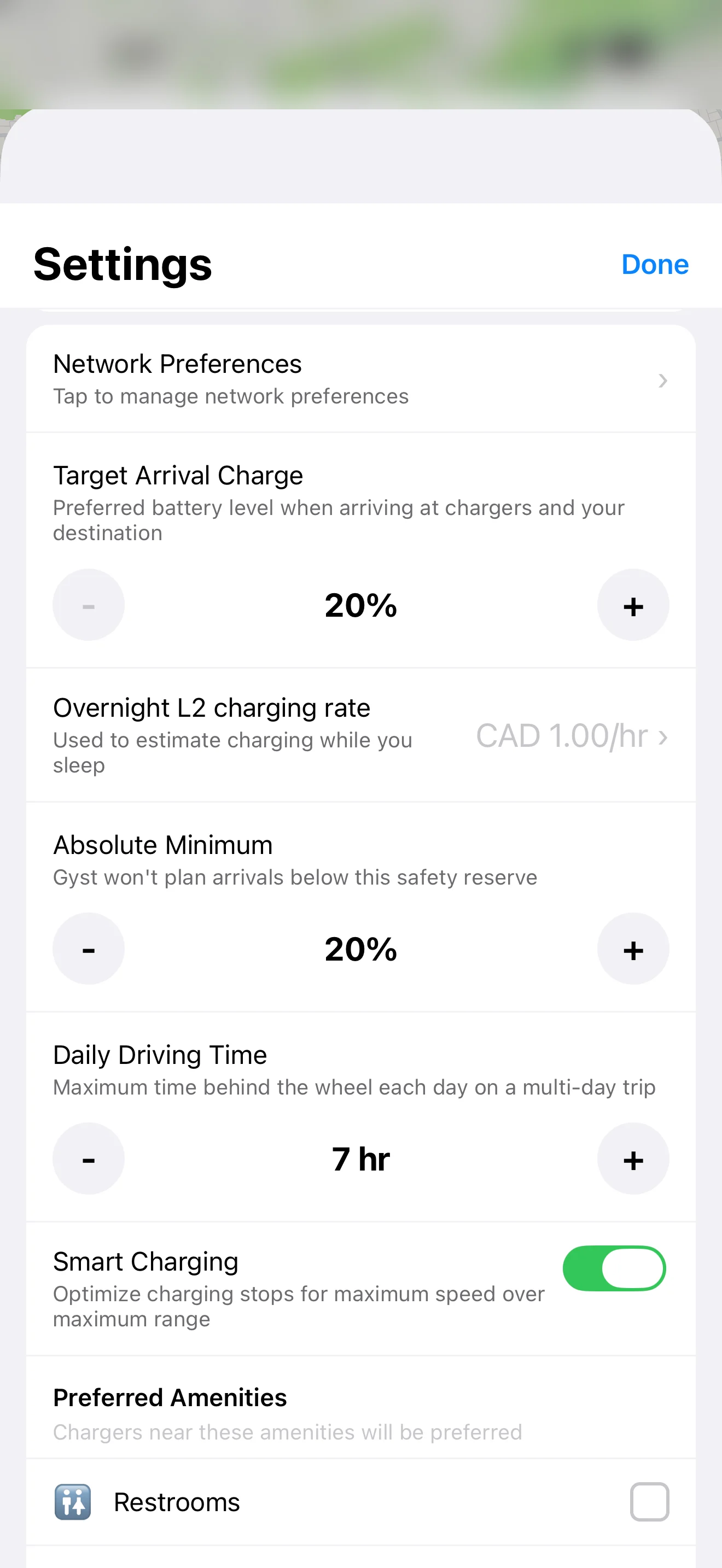
We plan with 20%. That leaves room for a cold morning, a detour or a charger that turns out to be busy or broken, without adding stops the trip doesn’t need.
Set it lower and each leg stretches further between chargers. Set it higher and you get more buffer, with longer or more frequent charging stops.
GYST’s Settings have two numbers for this. Target Arrival Charge is the level GYST aims for when you reach each charger and your destination. Absolute Minimum is the floor: GYST won’t plan an arrival below it.
The target can’t go below the minimum. With both at 20%, every arrival in the plan aims for 20%.
On October 28 we planned Toronto to Montréal in a 2024 Ioniq 5 leaving at 100%, with both settings at 20%. GYST planned 546 km with one stop: a ChargePoint charger at the Petro-Canada in Brockville, 335 km in.
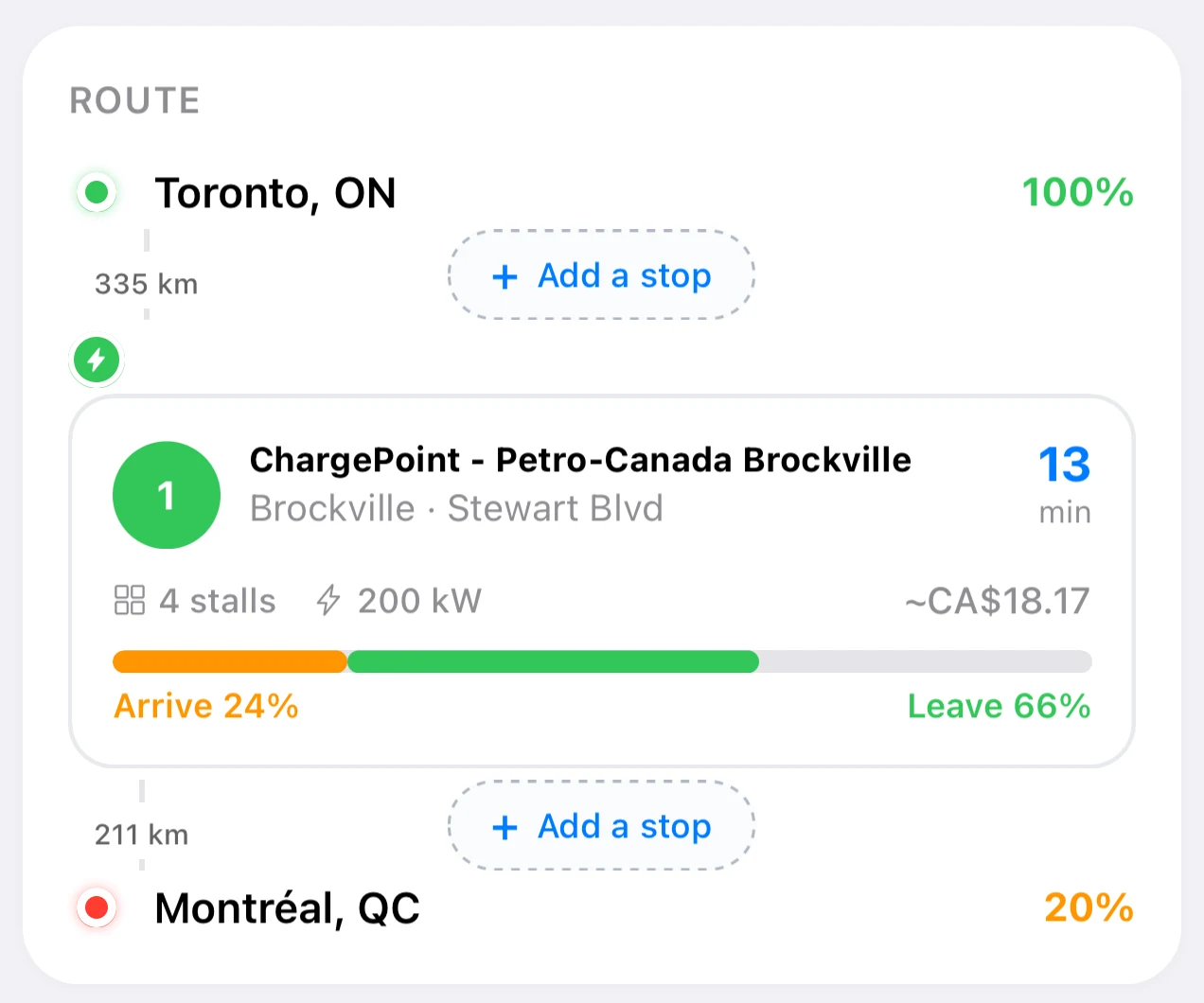
The car reaches Brockville with 24% and leaves 13 minutes later with 66%. That covers the last 211 km, and the plan reaches Montréal with 20%, right on the target.
GYST didn’t fill the battery at Brockville. It added what the last leg needed to arrive at the target, so the stop stayed short.
Starting charge moves the stop too. Leaving at 80% instead, our October 6 plan for the same drive stopped at Napanee for 26 minutes.
Smart Charging, which we leave on, tells GYST to plan for charging speed over range. Most EVs charge fastest when the battery is low and slow down as it fills, so arriving low and leaving before the slow part usually means less time at the charger.
With it off, GYST plans for range instead.
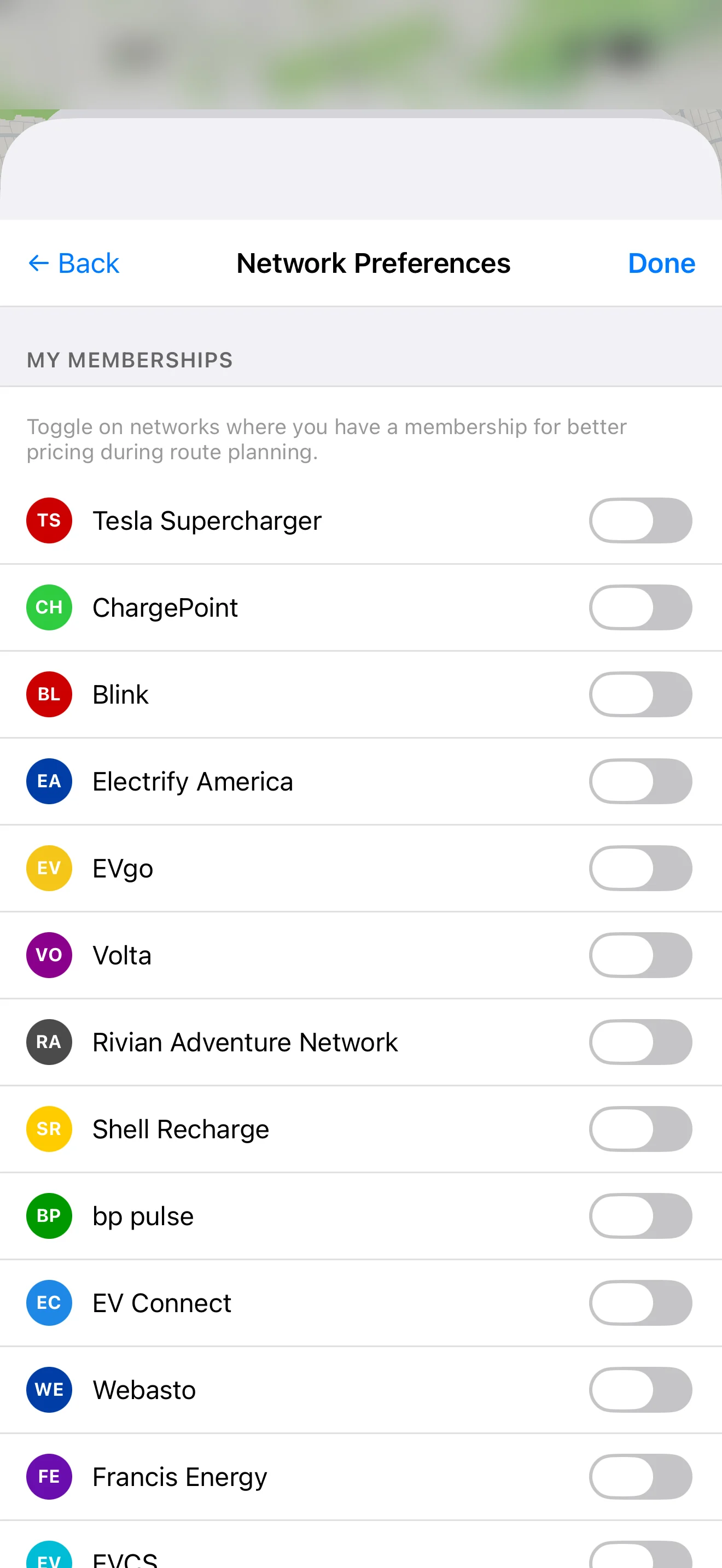
Arriving with 20% is easier when the charger works and you can pay for it. In Network Preferences, turn on the networks where you have a membership so the plan uses your pricing, rank your preferred networks and list any you want to avoid. Avoided networks are left out of the plan but still show on the map.
Arrival levels are estimates. Speed, temperature, wind and hills all change them, and GYST doesn’t read your car’s battery live. At a charger, enter your real battery level and GYST rechecks the next leg.
GYST is free to plan with on iPhone. Pick your exact vehicle, enter where you are going and GYST builds the route with compatible charging stops, charging time and an estimated cost for the whole trip.
There is no single right number. We plan with 20% for room to handle cold, detours or a busy charger. A lower target stretches each leg; a higher one adds charging time.
Because 66% was enough to reach Montréal with the 20% target. Charging further would have taken longer without changing the plan.
No. At a charger, you enter your real battery level and GYST rechecks the next leg.
Stop times, costs and charger details are estimates and change with your car, starting charge, weather and traffic. Always check your plan and charger status before you leave.
How cold affects range and charging, and how to plan for it in Canada.
Read the guideHow to plan stops, networks and overnights when the kids are in the car.
Read the guideA real plan split into charger cost and home charge: $30.64 for Toronto to Montréal.
Read the guideGet GYST news, product updates, EV travel tips and occasional offers.